A Geometric Approach to Quantum Mechanics
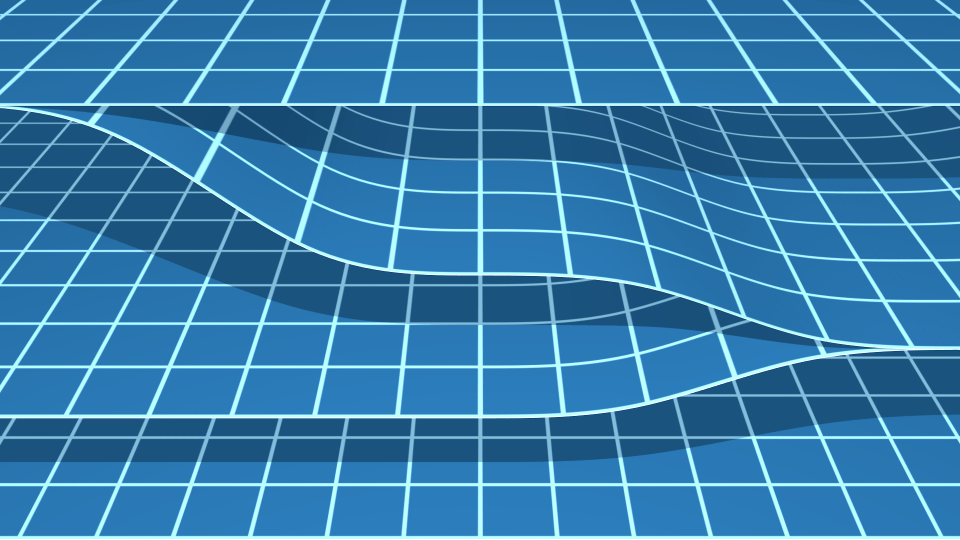
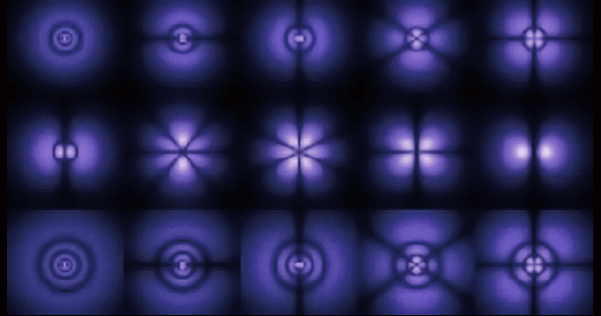
Knot Physics assumes that spacetime is a branched manifold. Quantum properties come from interactions between the branches. Elementary particles are knots in the spacetime manifold. Forces come from interactions between the knots.
A Geometric Model of Quantum Mechanics
This 3-minute video introduces how quantum properties arise from a branched, embedded spacetime manifold.
A Geometric Model of Quantum Mechanics
This 3-minute video introduces how quantum properties arise from a branched, embedded spacetime manifold.
Theory Summary
An overview of the entire theory, from simple assumptions about the spacetime manifold through particles, quantum mechanics, and forces
Learn more
Theory Summary
An overview of the entire theory, from simple assumptions about the spacetime manifold through particles, quantum mechanics, and forces
Learn more
Jobs
Our most recent round of hiring concluded on August 31, 2025.
For updates about new opportunities, please subscribe.
Featured Papers
Geometric Inflation and Late-Time Cosmic Acceleration from Embedded Spacetime Dynamics
Ali Nayeri & Clifford Ellgen (Jan 2026)
Abstract: We develop a cosmological framework in which spacetime is treated as a four-dimensional manifold dynamically embedded in a higher-dimensional flat Minkowski background. Ultrarelativistic motion of the embedded manifold induces strong time-dilation effects between embedding time and proper time, generating a genuine phase of inflation with strict exponential expansion for comoving observers, without invoking an inflaton field or scalar potential. The inflationary phase satisfies the defining kinematic criteria, including a shrinking comoving Hubble radius, and admits a natural graceful exit as time dilation weakens. At late times, large-scale embedding dynamics give rise to a geometric expansion attractor that yields sustained cosmic acceleration without a bare cosmological constant. More generally, the attractor can be quasi-stationary, allowing a slow weakening of the effective acceleration rate while remaining non-phantom. Small deviations from uniform embedding motion excite long-wavelength co-dimensional modes that generate subdominant oscillatory corrections to the expansion rate. We derive the structure of linear perturbations arising from embedding fluctuations and show that they naturally produce nearly scale-invariant curvature perturbations with a suppressed tensor-to-scalar ratio. This framework provides a unified geometric origin for inflation, primordial structure, and late-time acceleration, without new fields or fine tuning.
Preprint
Finite Path Integrals on Stochastic Branched Structures
Roukaya Dekhil, Clifford Ellgen, & Bruno Klajn (Jul 2025)
Abstract: In this paper, we present a statistical model of spacetime trajectories based on a finite collection of paths organized into a branched manifold. For each configuration of the branched manifold, we define a Shannon entropy. Given the variational nature of both the action in physics and the entropy in statistical mechanics, we explore the hypothesis that the classical action is proportional to this entropy. Under this assumption, we derive a Wick-rotated version of the path integral that remains finite and exhibits both quantum interference at the microscopic level and classical determinism at the macroscopic scale. In effect, this version of the path integral differs from the standard one because it assigns weights of non-uniform magnitude to different paths. The model suggests that wave function collapse can be interpreted as a consequence of entropy maximization. Although still idealized, this framework provides a possible route toward unifying quantum and classical descriptions within a common finite-entropy structure.
Published in J. Phys. A: Math. Theor. (2026) • DOI: 10.1088/1751-8121/ae513a
Additional papers cover theory fundamentals as well as a variety of topics, including entanglement and dark matter.
Topics in Knot Physics


Team

Cliff Ellgen
Lead Researcher
Ordinal Research Institute
B.S. in Mathematics, Caltech
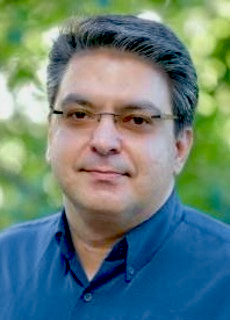
Ali Nayeri
Researcher
Ordinal Research Institute & Clear Quantum
Ph.D. in Theoretical and Mathematical Physics, The Inter-University Centre for Astronomy and Astrophysics (IUCAA)

Garrett Biehle
Researcher
Ordinal Research Institute
Ph.D. in Physics, Caltech

Bruno Klajn
Researcher
Zagreb School of Economics and Management
Ph.D. in Physics, University of Zagreb

Bassem Sabra
Researcher
Notre Dame University–Louaize
Ph.D. in Astrophysics, Ohio University

Sebastian Zając
Researcher
SGH Warsaw School of Economics
Ph.D. in Theoretical and Mathematical Physics, University of Silesia in Katowice

Dominique Kang
Program Manager
Ordinal Research Institute
B.S. in Economics, Arizona State University
Stay Updated
Subscribe for occasional updates on new papers, talks, and future opportunities.